
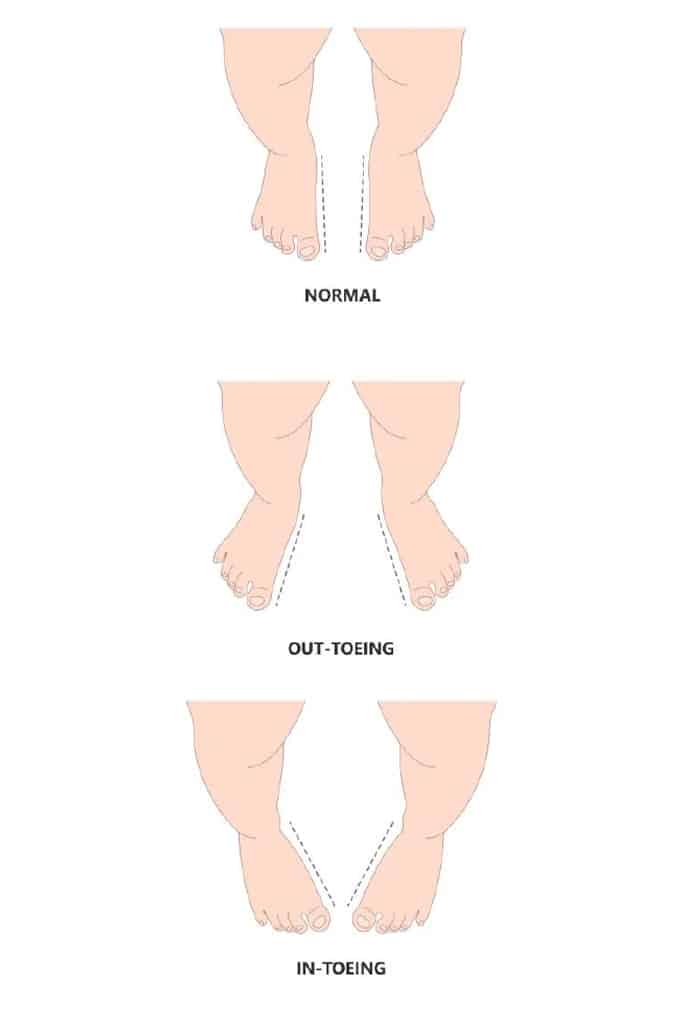
 Are your child’s feet turning inwards or outwards when they walk?
This is known as in-toeing and out-toeing. For most children, it’s a normal part of development and usually improves as bones, muscles, ligaments, and balance mature.
Sometimes, however, toeing can persist and lead to issues such as frequent tripping, poor leg coordination, difficulty going up or down stairs, or trouble balancing on one leg. Recognising these signs early can help ensure your child gets the support they need.
 What is In-toeing?
In-toeing, also known as pigeon toes, is when a child walks or runs with their feet pointing inwards. It can affect one or both feet and in most cases, in-toeing will resolve by itself by the age of 8 without intervention.
What causes in-toeing?
In-toeing can originate from three common regions and sometimes, it may have more than one cause.
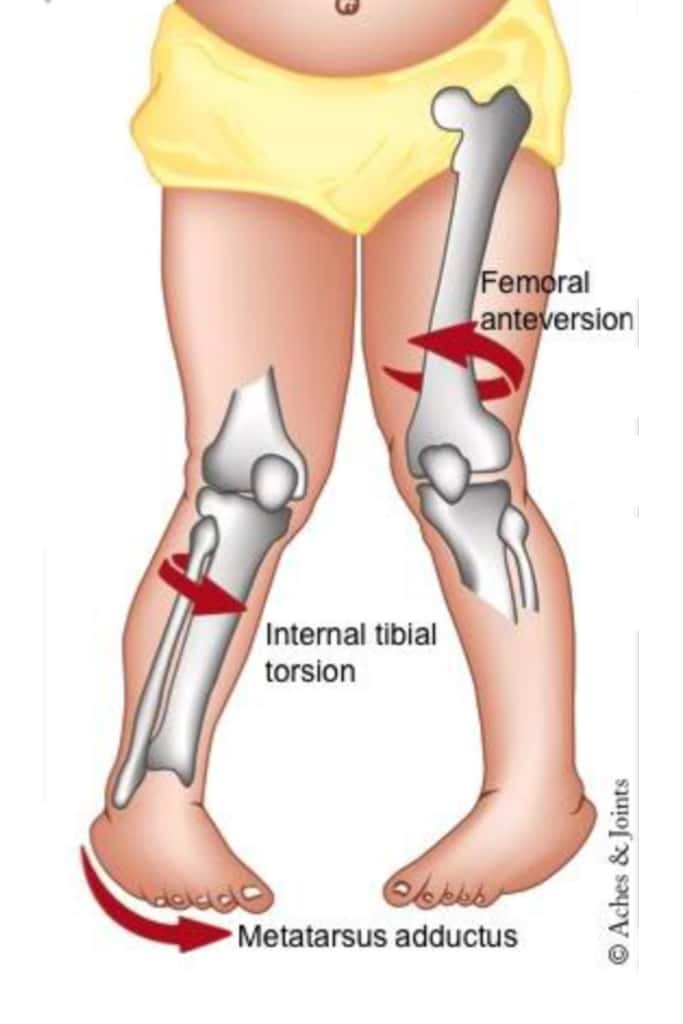
1) Foot – metatarsus Adductus
Metatarsus adductus is where the foot is turned inwards. The best way to tell is to see whether the outer border of the foot is curved like the letter ‘C’. Metatarsus adductus is more common in babies and is usually as a result of the baby’s positioning in the womb. In most cases, metatarsus adductus is flexible, and will respond well to stretching exercises if required.
2) Leg – internal tibial torsion
This is where the bone of the lower part of the leg rotates inwards.
 3) Thigh – Internal Femoral Torsion (Femoral Anteversion)
At birth, a child’s thigh bone (femur) is naturally rotated inward by around 40 degrees. This is completely normal. As children grow, this inward rotation gradually reduces, reaching approximately 10–15 degrees by around 10 years of age — which is the typical adult alignment.
In some children who walk with their feet turned in (in-toeing), this natural change happens more slowly, or the alignment develops differently. As a result, the hips remain more inwardly rotated than usual. This is known as femoral anteversion (sometimes referred to as internal femoral torsion).
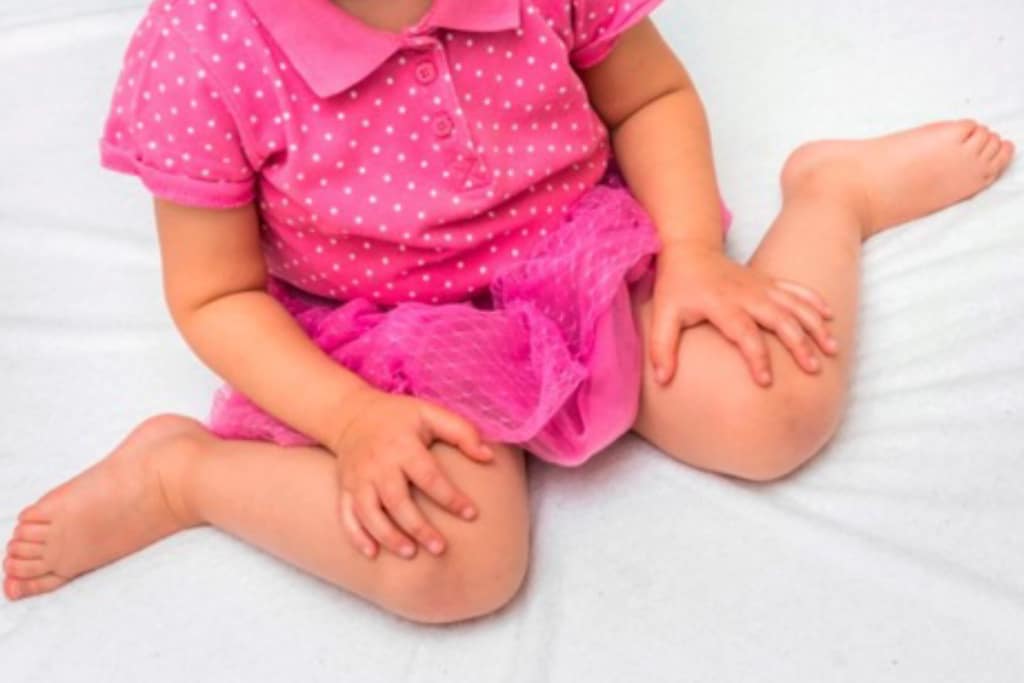
Femoral anteversion is actually the most common cause of in-toeing in school-aged children. Because of the way their hips are aligned, these children often find it more comfortable to sit in the “W” position. While W-sitting doesn’t cause the condition, it can reinforce the inward hip position.
In most cases, this is a variation of normal development and improves naturally over time.
 What is out-toeing?
Out-toeing is where your child may walk with their feet turned outward, like ‘duck feet.’ It is less common than in-toeing and out-toeing usually resolves by the age of 7.
What causes out-toeing
Out-toeing can result from various causes, with the most common including:
1) Thigh – External tibial torsion
External tibial torsion refers to the outward rotation of the shin bone and can be common between ages 4 and 7.
2) Hip – Femoral retroversion
This is where the thigh bone (femur) is rotated outward at the hip. This is due to the child’s position in the womb, which can cause tight hip muscles. As the child begins to walk, the muscles may relax, and the outward rotation usually corrects itself. If it continues, it will be important to seek professional advice.
3) Flat feet
Children with flat feet may exhibit out-toeing. In this condition, the arches collapse and the ankles roll inward, causing the toes to splay outward. This gives the feet a “duck-footed” appearance, and such children may benefit from supportive footwear or orthotics.
When does my child need an assessment of their In-toeing or Out-toeing?
Children between 2 and 10 years old may walk with an in-toeing or out-toeing gait but it’s usually harmless if mild and improving. You should consult a paediatric physiotherapist if your child:
- Shows severe in-toeing or out-toeing that is not improving over time
- Is over age 2 and has recently started in or out-toeing and their walking looks unusual
- Has in-toeing or out-toeing in only one leg
- Complains of pain in the legs, knees, or hips
- Experiences frequent trips or falls
- Is unable to keep up with peers during play or sports
Early assessment at Ocean Kids Health can help determine if intervention, exercises, or orthotics are needed to support healthy walking and development.
 Physio Top Tips for In-toeing and Out-toeing
Animal Walks for All Kids
Turn exercise into play! Crawling like a bear, hopping like a frog, or hopping like a flamingo strengthens the hips and helps support leg alignment.
Obstacle Courses
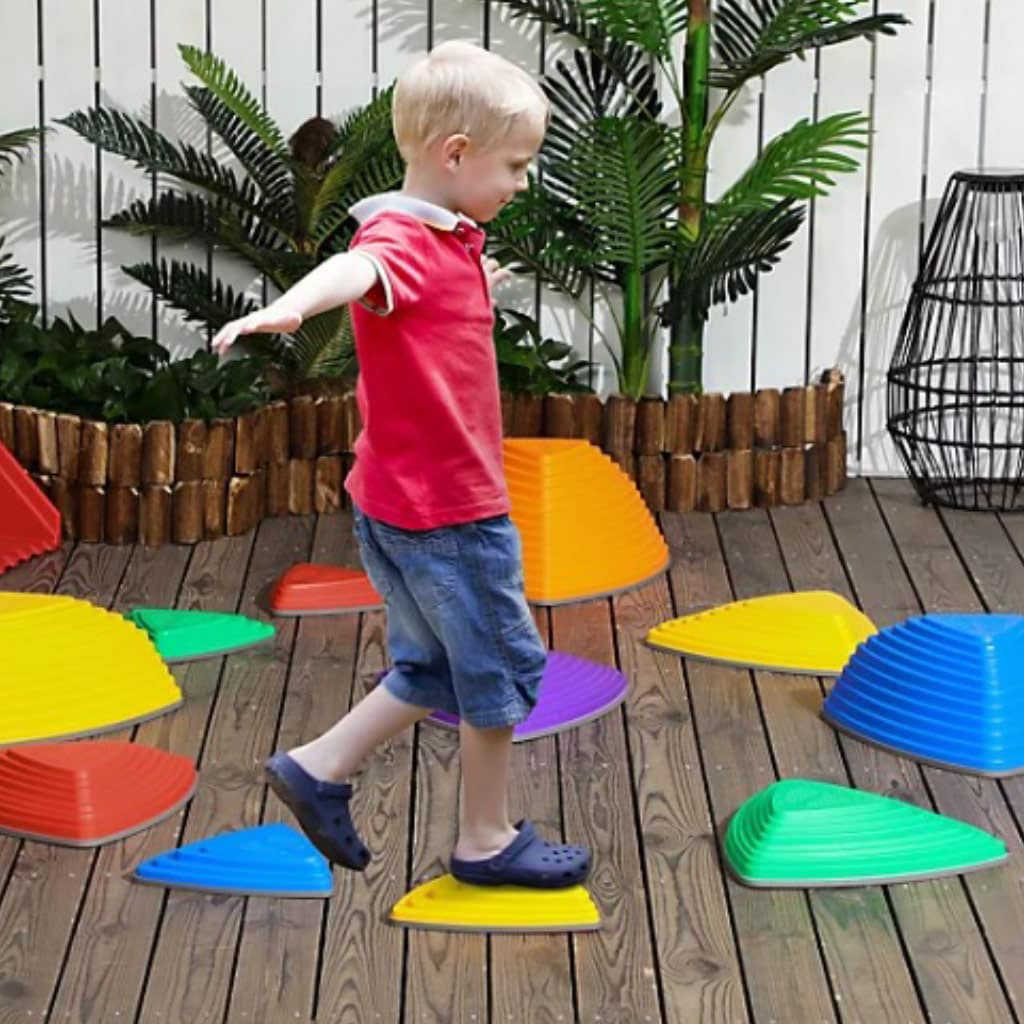
Set up a mini adventure at home or at the playground. Walking along a low beam, hopping over cushions, or stepping on foam shapes improves balance, coordination, and body awareness, helping reduce trips and falls.
Active Play
Encourage plenty of running, climbing, jumping, and playground games. These natural movements build leg and core strength, improve motor control, and keep children moving confidently.
Expert care for In-toeing and Out-toeing at Ocean Kids Health
Is your child’s walking pattern causing worry? Our team of paediatric physiotherapists at Ocean Kids Health can assess in-toeing and out-toeing, identify any posture, strength, or coordination concerns, and create a fun, tailored Home Program. We also provide practical strategies for home, kinder, and school to support confident, safe movement.
Early intervention works! Book a consultation today and help your child move with ease and confidence.
Thanks for reading!
By: Lisa Ho
Paediatric Physiotherapist
View out helpful parent/carer handout here.
Resources:
Gonzales, A. S., & Mendez, M. D. (2019, June 3). Intoeing (Pigeon Toes, Femoral Anteversion, Tibial Torsion, Metatarsus Adductus). Nih.gov; StatPearls Publishing. https://www.ncbi.nlm.nih.gov/books/NBK499993/
Intoeing – OrthoInfo – AAOS. (2015). Aaos.org. https://orthoinfo.aaos.org/en/diseases–conditions/intoeing/
Rerucha, C. M., Dickison, C., & Baird, D. C. (2017). Lower Extremity Abnormalities in Children. American Family Physician, 96(4), 226–233. https://www.aafp.org/pubs/afp/issues/2017/0815/p226.html
